

Dating over 40 as a single mom can fit the life you already have, rather than demand that you start again or catch up. Your available time, family responsibilities, interests and hopes all belong in the plan.
You can want companionship or a committed relationship and still move slowly. Dating, introducing someone to your children and deciding on a shared future are separate choices.
Set a pace around your actual life
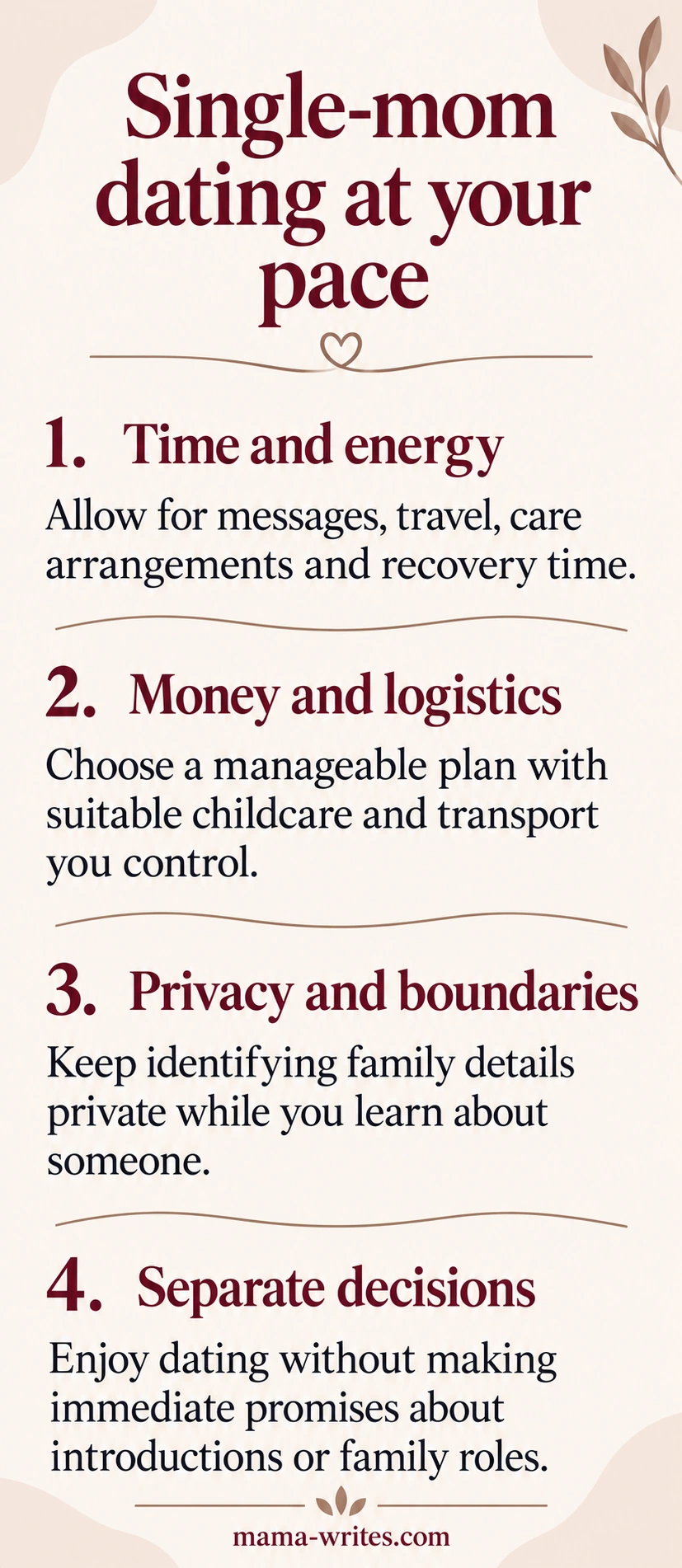
Read the guide as text
- Time and energy. Allow for messages, travel, care arrangements and recovery time.
- Money and logistics. Choose a manageable plan with suitable childcare and transport you control.
- Privacy and boundaries. Keep identifying family details private while you learn about someone.
- Separate decisions. Enjoy dating without making immediate promises about introductions or family roles.
Say What You Want
Before you create a profile or accept an invitation, talk about what you’re wanting. You can be specific without making promises. Maybe you want to be in a committed relationship but want to move slowly.
You might want to meet people but still be uncertain about the long term. Say things like, “I’m interested in being in a relationship, and I want to take my time getting to know someone.” This shows what you want clearly without pretending to want something casual just to not look serious.
You can change your answers as you figure out what you want. If you’re unsure, don’t give someone false impressions; just be honest, and it gives everyone a chance to choose what they want as well.
Keep Age Pressure in Perspective
Messages about dating after the age of 40 can mean that you should accept less, move faster, or be happy that anyone is interested. Pay attention to your ideas and if a certain person is right for you.
Your age might influence some decisions such as parenting plans, health, or care responsibilities. These deserve honesty, and they don’t mean that you have to set a deadline.
If you’re 46 and you have two teenage children and you want a relationship, but you want a first date every other week, and your friend says this is too slow, your actual schedule and comfort should be relevant to you instead of your friend agreeing with your personal time.
You don’t have to compete with the younger version of yourself on your dating timeline, but this should be about you.
Pace Yourself
Look at your regular month and find a time for a date, conversation, travel, and your work life. Make sure you pay attention to parenting, friendships, family, health, and rest. Pick a starting time that leaves room for you to change if you want to later. One date or a small amount of time on an app might be enough at first, and you can increase it later if you want to.
Setting a pace isn’t a rule about ignoring someone or not replying if you want to, but it’s an arrangement that protects your time and makes your commitments more realistic. If you normally have time to message in the evening, discuss availability with someone who respects your schedule, rather than feeling obliged to accept plans when you are not free.

Being Open About Motherhood
You can tell someone that you’re dating that you’re a mom without showing pictures, giving their names, ages, or routines. These are things you should keep private at first. Early dating doesn’t mean that you have to give details about your parenting life.
Look at the profile pictures for the school logos, house numbers, work badges, or routines that someone could pick up on and think about what a new contact could find out about you from online.
RAINN’s safer dating guidance includes privacy and first-meeting precautions. These can help you make a plan, while responsibility for any harmful behavior remains with the person who chooses it. No checklist guarantees safety.
Plan a First Date That Fits into Your Life
When you're a single parent, going on a date can involve a lot more planning than simply picking a time and place to meet someone. You might need to arrange childcare, figure out transportation, get ready, and make sure everything at home is taken care of before you leave. That's why it's important to plan the first date that works with your schedule and doesn't leave you feeling stressed or overwhelmed. Even if the date doesn't lead to another one, you should still be able to enjoy the time you spent getting to know someone.
You don't have to plan an expensive dinner or spend an entire evening with someone you've just met. Sometimes meeting for coffee, having lunch, or spending a little time talking in a public place is a better option. Think about how far you'll need to travel, whether the location is comfortable, and how easily you can get home afterward. A first date should give you an opportunity to get to know someone without making your everyday responsibilities more difficult.
If you need childcare, make arrangements with someone you already know and trust or with a childcare service you're comfortable using. Someone you're just beginning to date shouldn't automatically become responsible for watching your children or helping with childcare arrangements. It's important to keep your dating life and your children's routines separate until you've had enough time to get to know the person and decide what role, if any, they might eventually have in your family's life.
For an illustrative example, imagine Megan is a single mother who has been talking to someone she met through a dating app. They decide to meet for coffee at a small café near her workplace. Since her daughter is already staying with her grandmother that afternoon, Megan doesn't have to make any new childcare arrangements. She plans to spend about an hour getting to know him before picking up her daughter. This gives her time to enjoy the date without staying out late, inviting someone new into her home, or changing her daughter's routine.
This example shows that dating as a single parent doesn't have to involve complicated plans or major changes to your schedule. Sometimes keeping things simple can make dating more enjoyable while allowing you to maintain the responsibilities and routines that are important to your family.
Think About the Cost of Dating Before Making Plans
Dating can also involve expenses that you might not think about right away. Besides paying for dinner, coffee, or other activities, you might need money for transportation, childcare, dating app subscriptions, or clothes if you decide to buy something new. Before making plans, think about how much you're comfortable spending and whether those expenses fit into your budget. Dating should be something you can enjoy without worrying about how you're going to pay your regular bills afterward.
You also don't have to spend a lot of money to make a good impression. A thoughtful date doesn't have to involve an expensive restaurant or an elaborate activity. Sometimes something as simple as meeting for coffee, taking a walk in a public park, or visiting a local event can give you plenty of time to talk and get to know each other. If someone suggests something that's more expensive than you're comfortable with, it's okay to recommend another option that works better for your budget.
It's also important to remember that if someone offers to pay for your meal or another activity, it doesn't mean you owe them anything in return. You shouldn't feel pressured to go on another date, share personal information, or become physically intimate just because the other person paid. Spending money on someone doesn't give them the right to expect anything beyond what you're comfortable offering.
Be especially careful if someone you've recently started dating begins asking you for money. They might tell you that they have an emergency, need help paying a bill, or want you to invest in something with them. Others might ask for gift cards, loans, or access to your financial accounts. Even if you've spent weeks talking online and feel emotionally connected, that doesn't mean you've developed the trust needed to share money or financial information.
Do not send money to a romantic contact you have only met online. A request for money, gift cards or financial access deserves caution even if the connection feels meaningful. You can talk with someone you trust who isn't involved in the relationship and think about whether the request makes sense. You shouldn't feel guilty for protecting your finances or setting boundaries around money.
The important thing is remembering that dating should fit into your life instead of creating new financial problems or responsibilities. You deserve to enjoy meeting new people without feeling pressured to spend more than you can afford or give someone money just to keep their attention. Keeping your plans realistic and your financial boundaries clear can help make dating a more positive experience.
Respect and Responsibilities
A good sign isn’t just that they say they love your kids, but it is how they respond to availability and responsibilities. Can they accept advanced planning, change arrangements, or put limits on late-night messages?
Communicating availability can help both people plan, while a person remains responsible for respecting your limits. Parenting does not make the other person’s time irrelevant. Having mutual consideration includes giving someone notice and being honest with rescheduling.
If a date disappointed you because they canceled and had an urgent family issue, but they respond respectfully and offer to meet up another day, this differs from treating your child as a rival or pressuring you to neglect responsibilities to prove your interest.
Family Introductions
Getting to know someone and bringing them into your children’s lives are different decisions. You can like going on dates and not keeping every date a family event.
There’s no amount of dates that proves a person is ready to meet your children. Look at the stability of the relationship, what you have learned about the person, your child’s circumstances, and relevant parenting arrangements.
For separated or divorced families, AAP guidance emphasises supportive parenting and attention to children’s reactions. Apply it to that context rather than assuming every single-parent family has the same history.
Don’t use introductions to test if new relationships are serious. Clarify the adult relationship first and then consider a thoughtful plan for the children.
Let Your Children Share Their Feelings Without Making the Decisions
When you're a single parent and decide to start dating again, your children might have different feelings about it. Some kids might be excited or curious about the idea of you meeting someone new, while others might feel worried, uncomfortable, or completely uninterested. All of these reactions are normal, and it's important to give your children the opportunity to express how they feel. However, listening to their feelings doesn't mean that they should be responsible for deciding whether you're allowed to date or have a relationship.
Try to keep conversations about dating appropriate for your child's age. Younger children might only need to know that you're spending time getting to know someone, while older children might have more questions about what a new relationship could mean for your family. You can answer their questions honestly without sharing personal details about attraction, rejection, or problems you're having with someone you're dating. Your children shouldn't feel that they have to comfort you when a relationship doesn't work out or help you figure out what to do next.
If you eventually decide to introduce someone you're dating to your children, try to keep things simple and comfortable. You might start with a short activity or casual meeting instead of planning an entire day together. Don't expect your children to immediately love the person, show affection, or treat them like another parent. Building trust and developing a connection can take time, and your children should be allowed to move at a pace that feels comfortable for them.
It's also important to take your children's concerns seriously, especially if they mention something that makes them feel unsafe or uncomfortable. Listen carefully and get appropriate support if there's a reason to be concerned about their safety. However, your children shouldn't have to investigate someone you're dating, decide whether that person can be trusted, or take responsibility for protecting you from a bad relationship. Those decisions belong to you as the adult.
The goal is to make sure your children feel heard, loved, and secure while still allowing yourself to have a personal life. Their feelings should always matter, but they shouldn't have to carry the responsibility of making adult decisions about your romantic relationships.
Remember That Older Children Need Boundaries Too
Dating when you have teenagers or adult children can be different from dating when your children are younger. Older children might have stronger opinions about your relationships, especially if they're used to certain family routines or have concerns about how someone new might change things. If your teenagers or adult children still live at home, you might also need to consider how dating could affect shared spaces, household schedules, and family activities.
It's important to listen to their concerns and explain any changes that could affect their everyday lives. For example, if you're planning to have someone you're dating visit your home, it makes sense to discuss practical things like when guests will be there and how shared spaces will be used. However, that doesn't mean you have to share every private detail about your relationship or ask your children to approve every person you're interested in dating.
For another illustrative example, imagine Melissa has a 22-year-old son, Daniel, who lives at home while attending college. When Melissa starts dating someone, she talks with Daniel about practical things like having visitors over and making sure everyone feels comfortable in their shared home. However, she doesn't ask him to read her private messages, give opinions about every date, or decide whether the person she's seeing is right for her. She respects that Daniel has his own life while also maintaining the right to make decisions about hers.
Older children might also have feelings about holidays, family traditions, or the possibility of someone new becoming part of their parent's life. These conversations can be important, especially when a new relationship begins affecting established routines. However, there's a difference between considering how your decisions affect the household and allowing family members to control your personal relationships.
Just because your children are older doesn't mean their feelings no longer matter. At the same time, being a mother doesn't mean that every personal decision you make needs to be discussed and approved by the entire family. You can respect your children's opinions, maintain healthy boundaries, and still make your own decisions about dating and relationships.
Finding that balance can help you maintain a close relationship with your children while also giving yourself the freedom to build a meaningful romantic connection when you're ready.
Deciding on Intimacy
Returning to dating can be exciting, but it can also bring uncertainty. You can take time, ask questions, and change your mind. Always talk about consent and contraception when you need it. Sexual health deserves attention regardless of relationship status.
According to the CDC's STI testing guidance, it recommends discussing sexual history and appropriate tests with a healthcare provider. Testing needs depend on individual circumstances; being over 40 does not make someone exempt from sexual health considerations.
You don’t need to rush into intimacy to be confident or to be respected. Pick what you want, set clear agreements, and get the right care. If there is pain or a health concern, get qualified medical help.
Talking About the Future
If you’re over 40 and you have a career, home, children, debt, caregiving duties, and plans, these things can still fit in a relationship.
Ask what a serious relationship would mean to you, and would you want to live together or if there are children that are part of the picture. How much involvement would the extended family have, and what responsibilities are fixed?
Share your feelings honestly. You can want love without wanting to be married. Another person might want both. Don’t present your existence as an apology, but as information that helps both people understand the relationship. A strong connection deserves having practical truth and becomes a choice instead of an assumption.
Dating with Interest or Strain
After you have a few dates, ask whether it fits your life. Are you enjoying yourself and staying curious, or are you feeling overwhelmed and exhausted or even pressured? This answer might mean that you need to find someone new, set a different pace, or find different ways to meet. It doesn’t mean that you aren’t able to date.
Taking a pause can be a good decision about what your life can handle. You can go back to it without treating the break as lost time. If the experience brings grief, stress, or kills your mood, then this can make dating hard.
You might need to get professional support, and you don’t have to be completely healed to look for a connection, and you don’t have to force yourself to do things that feel overwhelming.
Setting a Pace
Pick a few limits such as how much time you want to spend on dating, what you can afford, what stays private, and what kind of relationships you’re looking for. Add one positive intention, such as enjoying the conversation, trying new things, or meeting someone who respects your life. Leave room to change your plan.
Review it after a few weeks and see if it felt worthwhile. What took more energy than you expected it and what limit helped you to stay present for yourself and your family.
Dating over the age of 40 and being a single mom can mean warmth, attraction, companionship, and new possibilities. Setting your own pace can help you to do these things by following your needs, your overall well-being, and your freedom to choose.
Plan a date at your own pace
Choose a manageable starting point and the status of care arrangements. No identifying family details are needed.
These choices organise logistics; they do not assess another person’s safety or create an obligation to date.
Use the questions and examples in the article above; the draft builder needs JavaScript.
15 questions readers ask
1. Am I too old to start dating after 40?
Age alone does not decide whether you can seek connection or what you must accept. Consider the relationship and pace you actually want.
2. Do I have to seek marriage?
No. Be honest about wanting companionship, dates, commitment, marriage or uncertainty. The other person needs room to decide whether their intentions fit.
3. How often should I date?
There is no required frequency. Choose a starting pace that accounts for care, work, money, travel, friendships and rest, then review it.
4. Can I say I am a mom without sharing my children’s details?
Yes. You can mention motherhood while keeping names, schools, photos, addresses and routines private during early dating.
5. What is a manageable first date?
A short meeting in a populated public place may suit you. Consider accessibility, childcare, your budget and a way home you control.
6. Should a new date help with childcare?
Do not automatically make a new romantic contact responsible for your children. Use suitable care arrangements with people or services you know and trust.
7. Does accepting a paid dinner create an obligation?
No. Paying does not entitle someone to more time, private information, physical contact or another date.
8. What if an online romantic contact asks for money?
Do not send money or financial access to someone you have only met online. Stop and check the request with a trusted person, and report suspicious activity.
9. When should someone meet my children?
There is no number of dates that proves readiness. Consider the relationship’s stability, what you know about the person, your children’s needs and relevant parenting arrangements.
10. Do my children decide whether I date?
Their feelings and safety matter, while adults retain responsibility for adult decisions. Do not ask children to assess a date, keep adult secrets or provide emotional reassurance.
11. Do older children still need consideration?
Yes. Discuss practical effects on shared spaces, routines and family plans while maintaining appropriate privacy about your romantic life.
12. What if a date dislikes advance planning?
Discuss what each person can offer. Someone can prefer a different schedule without being wrong, but pressure to neglect your responsibilities is a separate concern.
13. Does being over 40 remove sexual health concerns?
No. Ask a healthcare professional about testing and care appropriate to your circumstances. Discuss consent and contraception where relevant without rushing intimacy.
14. Can I want love without sharing a home?
Yes. Discuss what commitment would mean, including housing, family involvement and responsibilities. Do not assume the label guarantees the same plan.
15. Can I pause dating after starting?
Yes. You can slow down or stop if it does not fit your current capacity. A pause is information about your needs, rather than proof that you cannot date.